“Fast food” has always had a less-than-positive reputation in my adulthood, despite a regular Sunday lunch habit of McDonald’s, supplied by my parents when I was young. Of course, the popularity of such dining experiences wasn’t just ’cause they were “fast” — the idea that familiarity on a mass scale generates attention (and profits) is now visited on everything from architecture (“McMansions”) to careers (“McJobs”).
Although “McSongs” hasn’t (that I know of) ever become a term, there’s no question than mass familiarity is an important part of the arts, especially music. Radio broadcasts used to give the repetition required to generate familiarity; these days it’s social networking and streaming service algorithms “guessing” what we want to hear, rather than what might be valuable or interesting in a general sense. As a result, mass market darlings like the Eagles or Taylor Swift occupy an outsize part of our attention. That isn’t to say that “familiar” equals bad — Handel’s The Messiah and Tchaikovsky’s The Nutcracker are great works, despite their outsized repetitive presence. But their dominance of the concert stage owes a lot to our need for that repetition and familiarity. When any music artist or ensemble, pop or classical, takes the stage, the fans demand (and mostly receive) the same old familiar hits, played ad nauseam. James Taylor’s final verse of “That’s Why I’m Here” captures it…
Fortune and fame’s such a curious game
Perfect strangers can call you by name
Pay good money to hear Fire and Rain
Again and again and again
Some are like summer coming back every year
Got your baby, got your blanket, got your bucket of beer
I break into a grin from ear to ear
And suddenly it’s perfectly clear
That’s why I’m here…
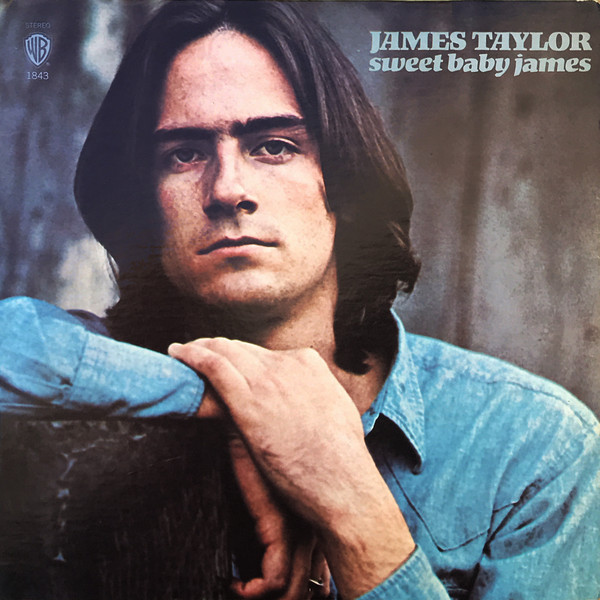
Recently I reviewed the lyrics of the song he mentions above (“Fire and Rain,” from the album Sweet Baby James) and, frankly, they’re pretty pedestrian — not Mr. Taylor’s best work, from the perspective of his whole career. But I also remember playing the album 20 times in one day, on a visit to my brother in Boston, shortly after its release in 1970. I still respond emotionally to the song, and that response is mostly due to its repetition-induced familiarity.
As Mr. Taylor mentions above, musicians are aware of, even celebrate, such (often low-level, non-critical) repeated appreciation of their work. Knowing that complicates the possible emergence of new music — chasing something new is a dangerous and often fruitless pursuit, both for the musician and the consuming public. People crave familiarity, even from new stuff, which means that “formulaic” songwriting and composing is often rewarded with attention and appreciation, and much more interesting new works are ignored.
There are exceptions to such music consumers — people who regularly attend and celebrate musical experiences that are not at all familiar. But there are by no means enough of them to dependably populate the audiences for new music. So, to survive, familiarity has to be won surreptitiously. I mentioned radio and streaming services above. Cultural context can help a lot — many “new music” categories depend heavily on people who like being a part of such an exclusive club, regardless of their ability to appreciate and understand the music that it delivers. (I’m guessing much of the audience of an avant-garde jazz concert might be in that category.) And, of course, a musician can just push new stuff out, hoping that an accidental event or cultural context could “make the music go viral.” All kinds of odd stuff can become familiar and immensely popular in this way. (Leonard Cohen’s “Alleluia” is in this category, in my opinion.)
As a retired educator, I’ve taken a different approach — this website holds lots of “teachable moments” which, if pursued, can provide the attention to details and musical ideas that might lead to familiarity with the larger work. But the educational motivation and curiosity of the general music-consuming public won’t get me particularly far either, and the lack of traffic seen by my work here certainly shows that. (My lack of promotion doesn’t help. And, if you’ve read this far, you’d probably agree that my affection for obfuscation doesn’t either!) So I’ll supplement that with “Hey, listen to this!” social media postings, and maybe, just maybe…
I do still like hamburgers. But it’s been probably 45 years since the ol’ 15¢ hamburgers of my preteens have made it into the rotation. Needless to say, McDonald’s, as a business interest, is still a very popular and profitable venture, so they won’t miss my money. And I don’t avoid repetitive and familiar experiences either — as I noted on this blog, I listen quite regularly to my own compositions, and enjoy them immensely, for reasons that include familiarity.
But I skipped the latest Eagles concert, and feel no regrets.
 Jeffrey L. Jones, Composer