
The composition begins and ends with thematic material intended to represent the entire reef, seen above. Variations of the main theme also provide short transitional phrases between each “creature” section. To help identify these sections, I’ve mentioned the instruments which start each.
Blanket Octopus
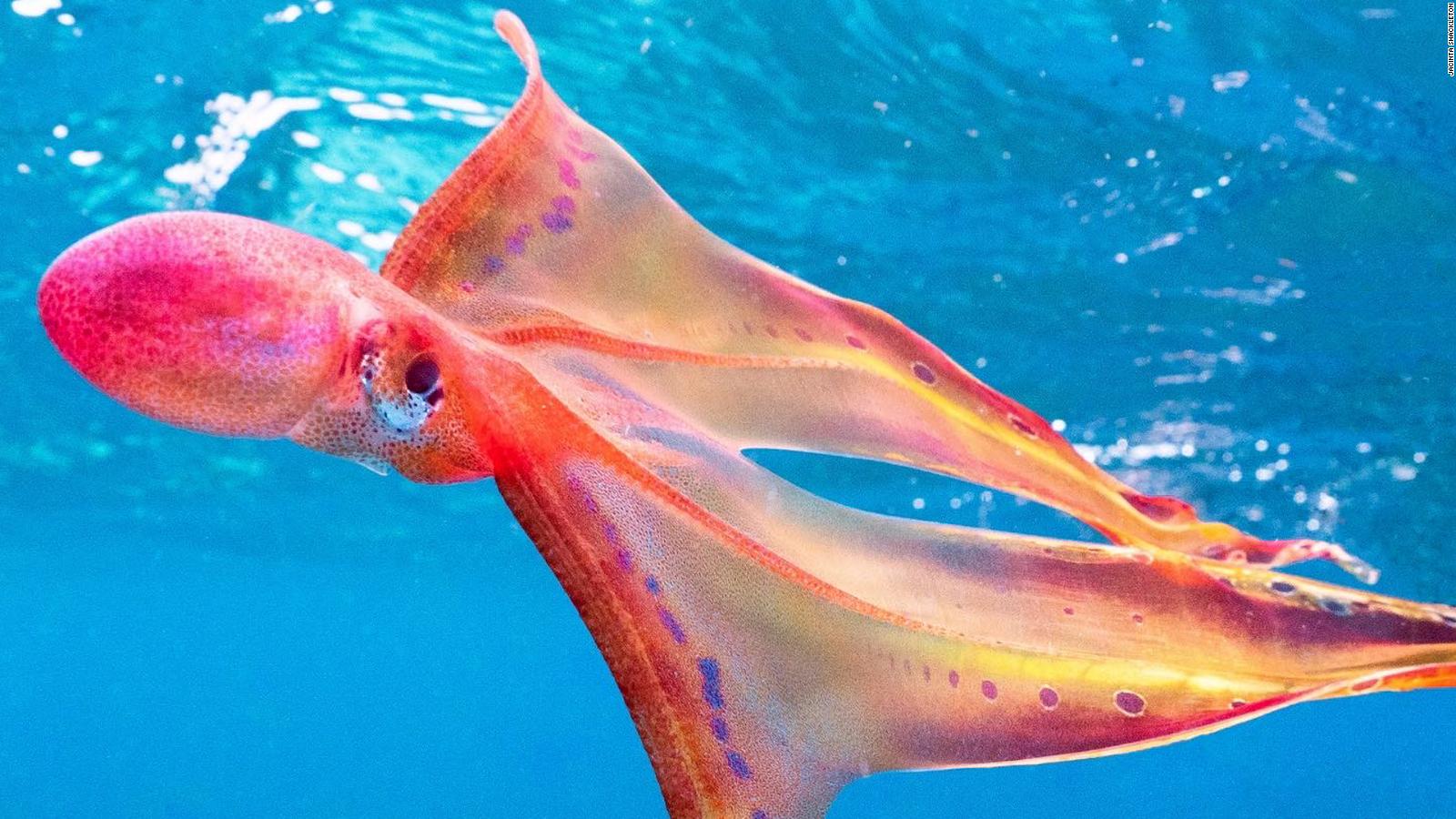
[Clarinet, flute, piano]
The female of this odd (and very shy!) member of the octopus family has a large membrane (the “blanket”) which covers two of its arms. The male, unlike its often 6’+ mate, comes in at around 2 inches, and lives solely for the purpose of delivering to the female a small arm attached to a pouch, for reproductive purposes. The arm is removed and held by the female. That, unfortunately, is probably the end of that poor dwarf creature’s life.
Musically, the active and complex life of the female provides most of the inspiration for this section. After providing the transition from the opening section, the clarinet and alto flute deliver the first thematic statement, with added color from a fast piano riff. The male’s participation in the life of the species makes an appearance towards the end using the tuba. The trombone and tuba provide the transition to the next section.
Dugong
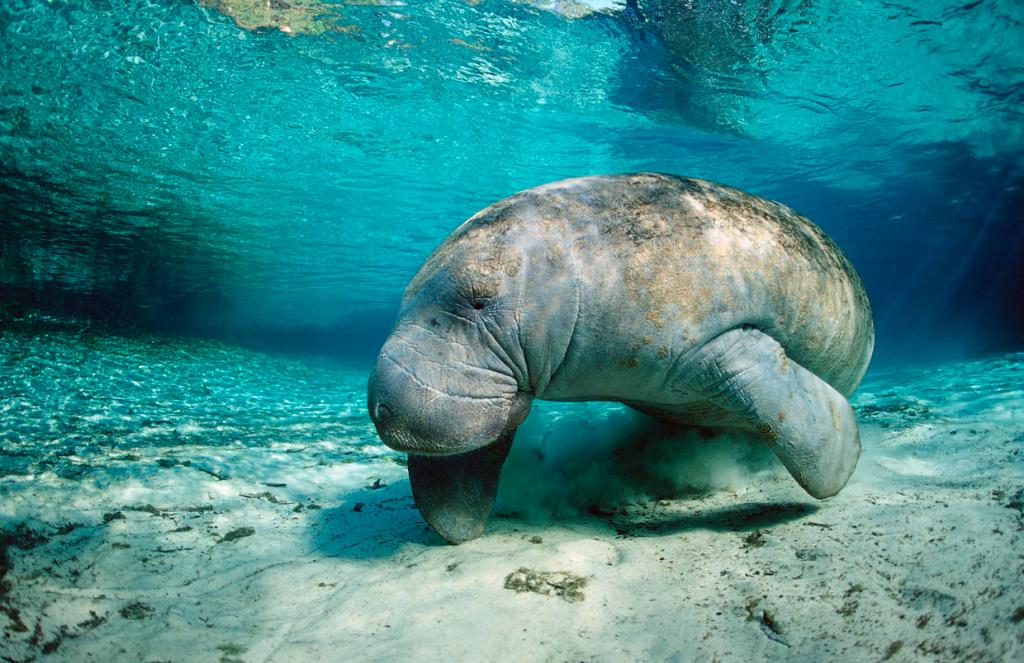
[Tuba, Trombone, bass drum.]
This relative of the manatee of Florida fame can be found throughout the south Pacific, and is common in the seagrass found between the Great Barrier Reef and mainland Australia. It has few natural enemies besides humans who have hunted several Dugong populations to near extinction. Females raise only two to three solo calves over their 50-year life span. With only fore-flippers and a fluked tail to propel their 550 lb.+ body, Dugongs move ponderously slowly, vacuuming seagrass for food.
This section leverages low brass with a very simple theme which rises during the section, with bass drum + low tom giving rhythmical color. When the section fades, the piano provides the transition to the next section.
Olive sea snake

{Trumpet]
This highly poisonous snake counts amongst its prey many small to medium sized fish and crustaceans. Although naturally curious, they’re mostly nocturnal, hiding in crevices in the coral reefs. Their tails can detect light, which makes their hunting and hiding easier since they can sense fish and exposure when hidden. Although a true air-breathing reptile, their huge lung means they can remain underwater for up to two hours.
Snakes invite polyphony, and this section is a shortened fugue. The trumpet gives the opening statement, followed in more-or-less traditional form by soprano sax, trombone, and finally the flute and sax together. A rolled tam-tam provides a proper sea-like setting. At the end, the transitional phrase makes an early appearance in the woodwinds, with clarinet and tuba completing the transition.
Māori Wrasse
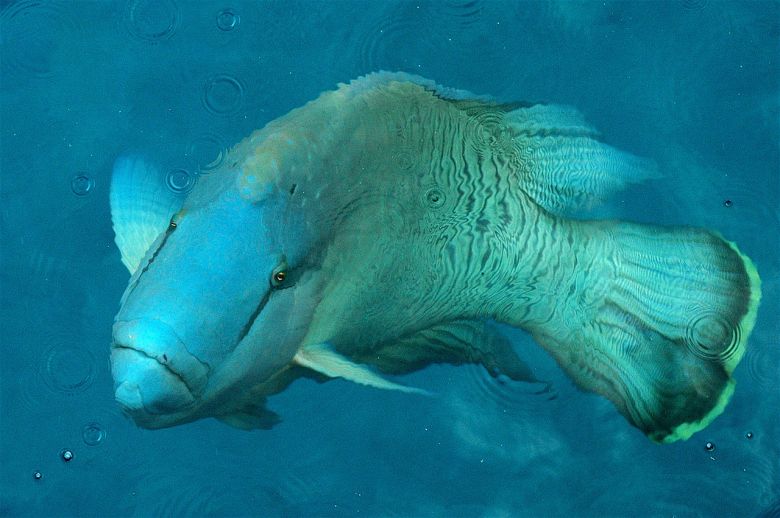
[Piano and Trombone.]
Also called the humphead Wrasse (for obvious reasons!) this large endangered poisonous carnivore can be found in a lot of global habitats, but especially in the outer edges of the Great Barrier Reef. Their inquisitive behavior sometimes compels them to follow reef divers around like large, friendly dogs.
The comical appearance and behavior of this friendly fish is portrayed by lots of sliding pitches from the trombone over piano.
 Jeffrey L. Jones, Composer