Probably for the past two decades, the intro to the chorus of a pop song from 1964 served as the soundtrack of thousands of video shorts in social media, all with a theme of impending doom (or, more likely, just imminent embarrassment). The musical clip came from “Remember (Walking in the Sand)”, a hit for the Shangri-Las, a “girl group” from Queens. Of course, in typical Facebook/Instagram/Twitter/etc/etc. fashion, the song excerpt is only a few seconds long. a repeated “Oh, no!” phrase. The automated content-generation tools, which included the excerpt as a selectable music background, insured mass saturation of it, and hundreds of other familiar musical excerpts. Needless to say, most of the consumers of these video shorts weren’t alive in 1964. I was, though I must confess I still had to search the excerpt online to be reminded of the details.
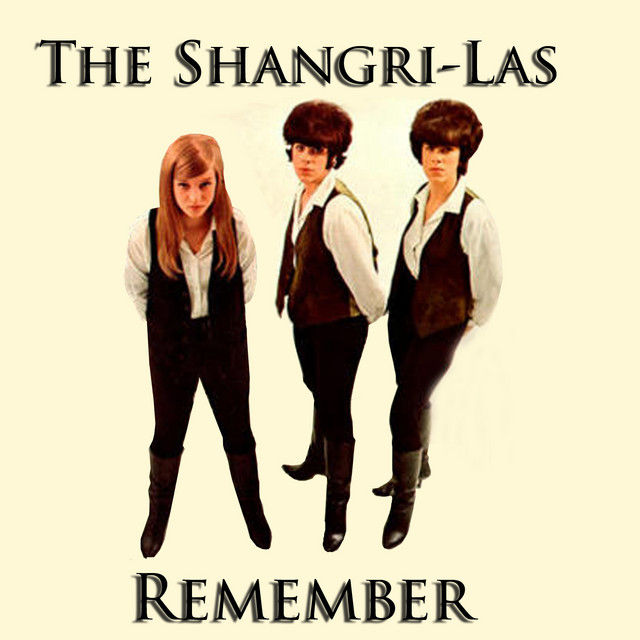
The song, and the style the Shangri-Las represented, were not what I was listening to then, or now — in 1964 I wasn’t even listening to the Beatles, and they were massive then. But apparently, the group, and the song, were significant enough for Wikipedia to have an entry for it! It’s an interesting read.
What got me thinking about all this was actually photography. (Stick with me here!) Back in 1977, author Susan Sontag released a collection of essays titled “On Photography,” which, amongst other things, discussed what the access to simple and inexpensive cameras had done to the importance and significance of experiences, as everyone rushed to place themselves in what those cameras made of them. Fast forward to the digital age, and that idea has been completely overwhelmed by pure volume. And the “selfie” has become the thing. Even physical spaces guaranteed to produce oohs and aahs by everyone observing them (think the Grand Canyon or Yosemite), your ability to take a picture of such is complicated, as masses of selfie-seeking photographers wanting to insert themselves into the shot are in the way. Sontag was right, but well under the mark.
Enter the masses of social media content-creators and their impact on a simple pop song from 1964.
I’ve already spoken here about what these kinds of forces might do for people wanting to produce new, original, personal artistic statements through music (see “Anyone hungry for a hamburger?“). In that essay, I talked about how our craving familiarity has impacted the creation of new music. Here, I’m looking at pure saturation. A huge percentage of the click-bate content of social media have music. Most of the consumers of that slop have no idea that, in fact, the music soundtrack is (or can be considered to be) a part of the more general world of music. If we throw in other sources (TV ads, business background music, to name two), we’re pretty much surrounded by music almost all of our waking hours.
Why would a composer complain about that? Well, two reasons.
First of all, music stops being an event. If almost all of your music consumption is just a generic part of everyday experience and a background to other media, what does that do to your relationship with pure music experiences — carving out time and money to go somewhere where music is the sole reason for your presence? And would you consider such an event if your previous contact with the music was thirty TikTok videos of a guy missing a trampoline launch? (You might never have considered seeing the Shangri-Las live, but would you go see a production of Carl Orff’s Carmina Burrana knowing that the introduction has been played by every college marching band during virtually every football game in the last 30 years? Not familiar? Try this.)
Secondly, the value of music in memes/ads/football games is somewhat reduced by the fact that it’s just there to enhance the visual media. Music’s importance is diluted, and not just by pure omnipresence and saturation. The personal relationship between a musician, a listener, and a composition is completely gone for almost all the music we consume.
This is why, when I’m driving, it’s rare for me to have music playing. It isn’t because I don’t like music as much as my pop-radio-station-addicted wife. It’s because, for me, music is an experience with components that are absent, or supplanted, or simply unavailable, in the usual media settings. I may dislike the pop sensibilities of a 1964 “girl group,” but I still crave the songwriter’s name, the career placement. even the physical geography of the musicians involved.
When we attended the last Lexington Philharmonic concert, we were running a bit late, so didn’t get a program before seating ourselves. Although the most significant work on the concert (Antonín Dvořák’s New World Symphony) was quite familiar to me, I still looked up the work online to remind myself of its historical placement, general form, and initial reception, the stuff concert programs usually provide. I also recently, quite by accident, became fascinated with a Nashville trio, The Wood Brothers. Although a lot of their songs aren’t particularly memorable (especially lyrically), a few are. I made sure I knew who they were, their background and basic history, and musical influences. The bottom line is, my relationship with music has many more intertwined connections than mass media can begin to provide.
That doesn’t mean I have an expectation that all music consumers should be that serious about such things. My fear, though, is that the more omnipresent and diluted our music becomes, and the more disconnected we are from the people for whom music is a personal expression of who they are, the less possible such connections are, the more unlikely we’ll be offered that as an opportunity.
And don’t get me started on how artificial intelligence fits into such a discussion.
For now, just know that if I’m not listening to music, it isn’t because it isn’t interesting to me. It’s because it’s so interesting that I’m quite selective about where, how, and from whom I engage in musical experiences.
I hear you, Shangri-La (and, significantly, “Shadow” Morton, the songwriter and producer). Oh, no! Oh, no! You’ve been lost!

